



Introduction
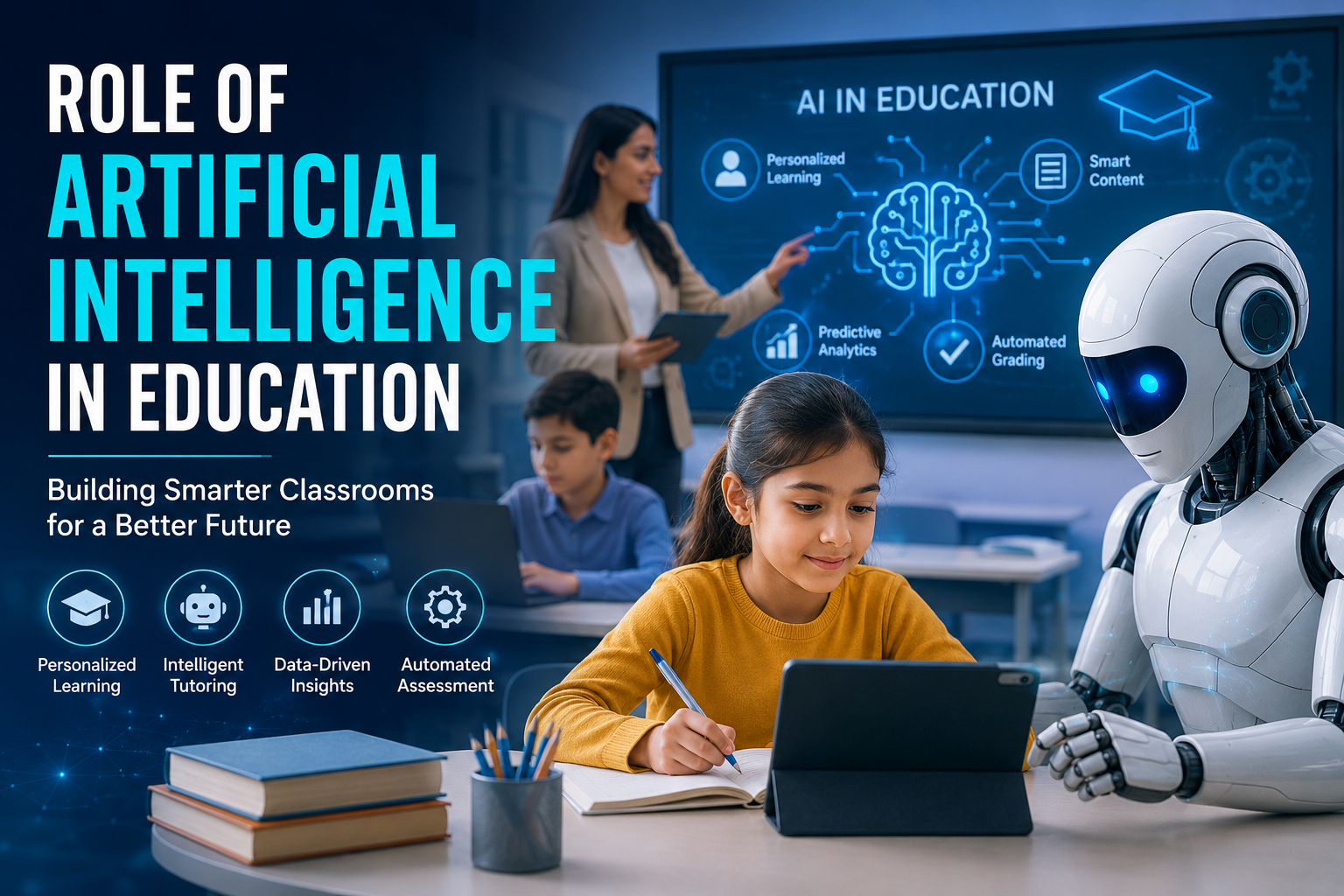
Artificial Intelligence (AI) is revolutionizing the education sector by making learning smarter, faster, and more personalized. From virtual tutors and intelligent chatbots to automated grading systems and adaptive learning platforms, AI is transforming the way students acquire knowledge and how teachers deliver lessons.
The role of artificial intelligence in education extends beyond technology. It supports educators in reducing repetitive tasks, helps institutions make data-driven decisions, and enables students to learn according to their individual needs and pace. As educational systems continue to embrace digital transformation, AI has become one of the most influential innovations shaping the future of learning.
Understanding Artificial Intelligence in Education
Artificial Intelligence refers to computer systems designed to perform tasks that typically require human intelligence, such as learning, reasoning, decision-making, and language understanding. In education, AI-powered tools analyze student behavior, recommend personalized content, automate assessments, and improve the overall learning experience.
Educational institutions use AI to enhance classroom engagement, improve accessibility, and provide customized instruction that benefits learners of different skill levels.
Evolution of AI in Learning
The use of AI in education has evolved from simple computer-assisted learning programs to advanced systems capable of understanding learning patterns, predicting student performance, and providing individualized recommendations.
From Traditional Learning to Smart Learning
Earlier educational technologies focused mainly on digital content delivery. Modern AI systems actively interact with learners, evaluate progress, and adapt educational materials based on performance.
A New Era of Education
AI is creating opportunities for lifelong learning, flexible education models, and improved collaboration between teachers and students.
Why Artificial Intelligence Matters in Education
Education is no longer limited to classrooms and textbooks. Students expect interactive, engaging, and personalized experiences, while educators seek efficient ways to manage administrative responsibilities.
AI addresses these needs by:
- Delivering personalized learning paths.
- Providing instant feedback.
- Automating repetitive administrative tasks.
- Supporting inclusive education.
- Improving educational outcomes through data analysis.
Major Benefits of Artificial Intelligence in Education
Personalized Learning Experiences
Every student learns differently. AI systems evaluate strengths, weaknesses, and learning habits to provide customized lessons and exercises that improve comprehension.
Intelligent Tutoring Systems
AI-powered tutors are available around the clock, helping students solve problems, review concepts, and practice independently.
Automated Grading
Teachers save valuable time by using AI to evaluate quizzes, multiple-choice tests, and routine assignments while focusing on higher-value teaching activities.
Enhanced Student Engagement
Interactive simulations, gamified learning experiences, and adaptive quizzes encourage active participation and sustained motivation.
Applications of AI in Modern Classrooms
Smart Content Creation
AI assists educators in preparing lesson plans, generating quizzes, summarizing study materials, and creating practice exercises.
Language Learning Support
Students can improve grammar, pronunciation, vocabulary, and communication skills through AI-powered language learning tools.
Virtual Teaching Assistants
Digital assistants answer frequently asked questions, provide reminders, and help students navigate learning resources efficiently.
Accessibility for Diverse Learners
Speech recognition, text-to-speech functionality, live captions, and translation features make education more accessible for learners with different needs.
AI in Online Education
Online learning platforms increasingly depend on AI to personalize courses, recommend study materials, monitor progress, and improve learner retention. Students benefit from flexible schedules while receiving tailored guidance throughout their educational journey.
Advantages for Teachers
Teachers gain access to analytics that reveal student progress, identify learning gaps, and highlight areas requiring additional instruction. AI also reduces paperwork and administrative workload, allowing educators to dedicate more time to teaching and mentoring.
Advantages for Students
Students receive immediate feedback, customized learning plans, flexible study schedules, and continuous access to educational resources. AI encourages independent learning while supporting academic growth.
Challenges of Artificial Intelligence in Education
Although AI offers significant benefits, institutions must address several concerns:
Data Privacy
Protecting student information is essential when implementing AI-powered educational technologies.
Algorithmic Bias
AI systems should be monitored to ensure fairness and avoid unintended discrimination.
Technology Access
Not every learner has equal access to devices or reliable internet connectivity, creating potential inequalities.
Maintaining Human Interaction
Technology should complement teachers rather than replace the personal guidance and emotional support they provide.
The Future of AI in Education
Artificial Intelligence is expected to play an even larger role in shaping education through predictive analytics, immersive learning environments, intelligent tutoring systems, and personalized career guidance. As technology advances, educators and institutions will continue finding innovative ways to combine AI capabilities with human expertise.
Conclusion
The role of artificial intelligence in education is transforming how knowledge is delivered, accessed, and applied. AI empowers teachers with efficient tools, supports students through personalized learning experiences, and enables institutions to improve academic outcomes and operational efficiency.
By embracing responsible and ethical AI adoption, education systems can create more inclusive, engaging, and effective learning environments that prepare students for the challenges and opportunities of the future.